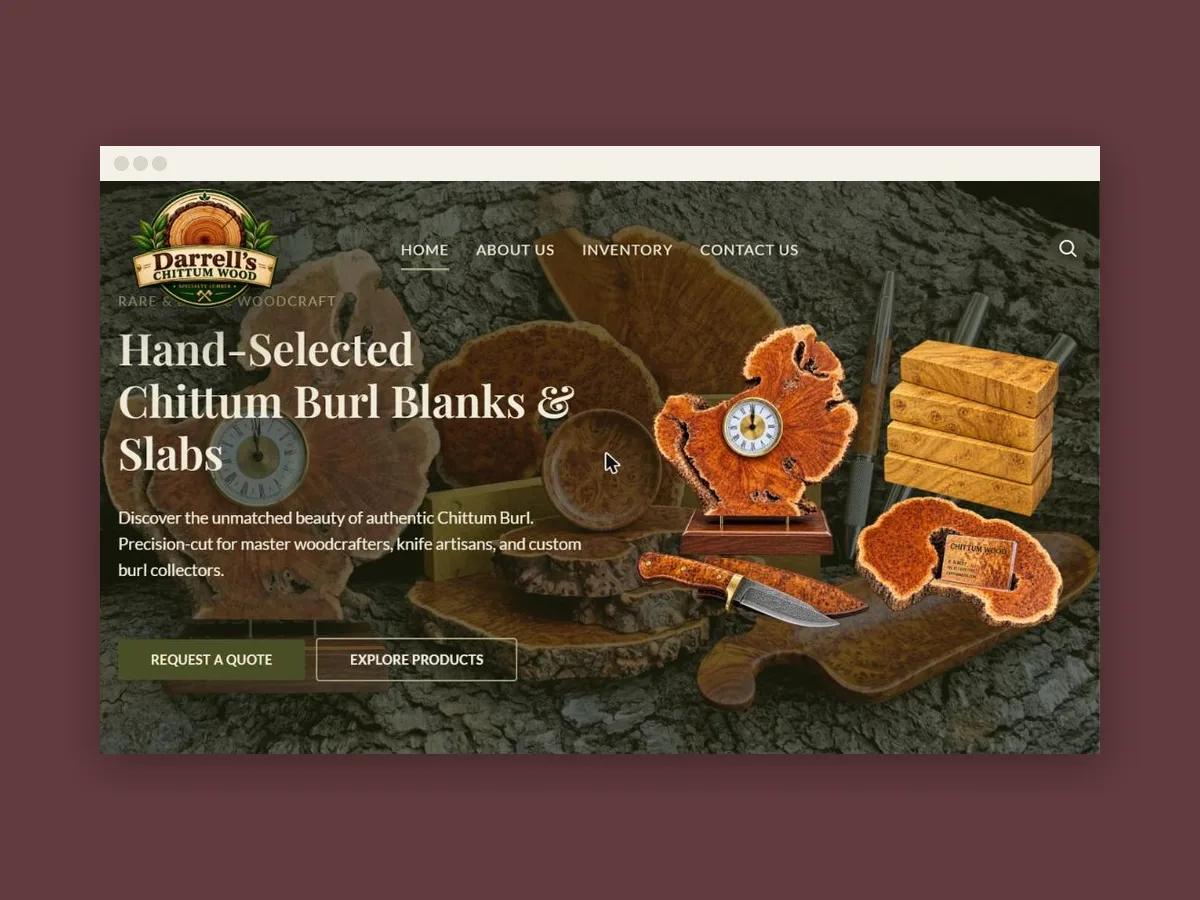
Darrell’s Chittum Wood
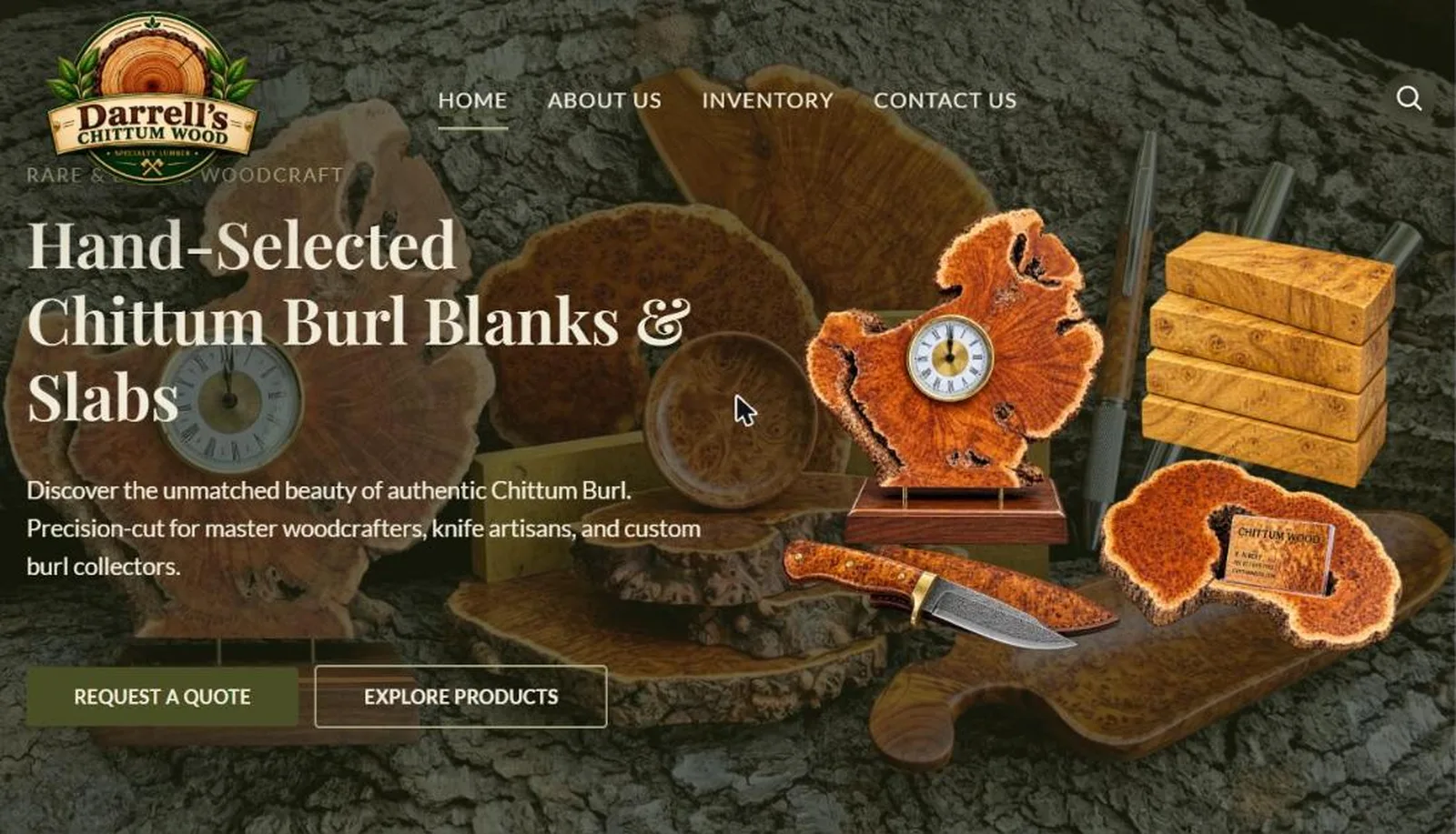
A product catalog and quote-request website for a specialty supplier of hand-harvested Chittum burl blanks, slabs and finished pieces.
Service · Build
Shopify and WooCommerce builds, migrations, and optimization for brands selling direct, with product pages, checkout, and operations designed together.
Overview
E-commerce projects go wrong in two directions. Some stores look beautiful and quietly break fulfillment, because nobody mapped how orders reach the warehouse, how returns are processed, or how inventory syncs across channels. Others work operationally but convert poorly, because product pages were treated as a database template rather than the main sales conversation.
We design and build both sides together. Product detail pages, collections, search, and cart are designed around your merchandising data, reviews, and the sizing or compatibility questions customers actually ask. Behind them, we connect your ERP, 3PL, subscription, and email tools so orders, stock, and customer data move cleanly. Shopify is our default for most direct-to-consumer brands. WooCommerce makes sense when commerce is one part of a larger, content-heavy WordPress site or when you need unusual product logic.
Most of our e-commerce builds land between $25,000 and $120,000. A focused Shopify theme build for a catalog of a few hundred products sits toward the lower end; custom storefront features, B2B pricing, complex migrations, or a headless front end push toward the upper end. Brands in Chicago and across the U.S. also keep us on after launch for conversion work and paid media.
Business problems we solve
Thin product content, unclear sizing, and buried shipping or returns details stop people right before they add to cart. Paid traffic makes that problem more expensive every day.
Bundles, pre-orders, variant imagery, or wholesale pricing get bolted on with apps that conflict with each other and slow the store down.
Staff re-key orders, export spreadsheets for the warehouse, and correct inventory by hand because the systems were never properly connected.
Years of products, customers, reviews, and search rankings live on the old platform. Without a migration plan, staying put feels safest, even on a store that is holding the business back.
Capabilities

Custom Online Store 2.0 themes with sections your team can rearrange, built to load quickly on mobile.
Custom WooCommerce stores for content-led brands and complex catalogs that need WordPress flexibility.
Product pages, collections, search, cart, and checkout designed around the questions that stall purchases.
Products, customers, orders, reviews, and URLs moved from Magento, BigCommerce, WooCommerce, or Shopify with redirects in place.
ERP, 3PL, inventory, subscription, and accounting integrations that keep orders and stock in sync.
Customer-specific pricing, quick-order forms, net terms, and gated catalogs for wholesale buyers.
GA4 e-commerce events, server-side conversion tracking, and a reporting view your team will actually check.
Approach & process
Catalog, fulfillment, integrations, and current performance reviewed to set priorities and scope.
Homepage, collection, product, and cart templates designed with real products and real data.
Theme development and system integrations on a development store, with test orders at every stage.
Data migrated in rehearsal runs, checkout tested end to end, and every redirect verified.
Launch in a low-traffic window, close monitoring, and a 60-day review of conversion and operations.
Related work
A product catalog and quote-request website for a specialty supplier of hand-harvested Chittum burl blanks, slabs and finished pieces.
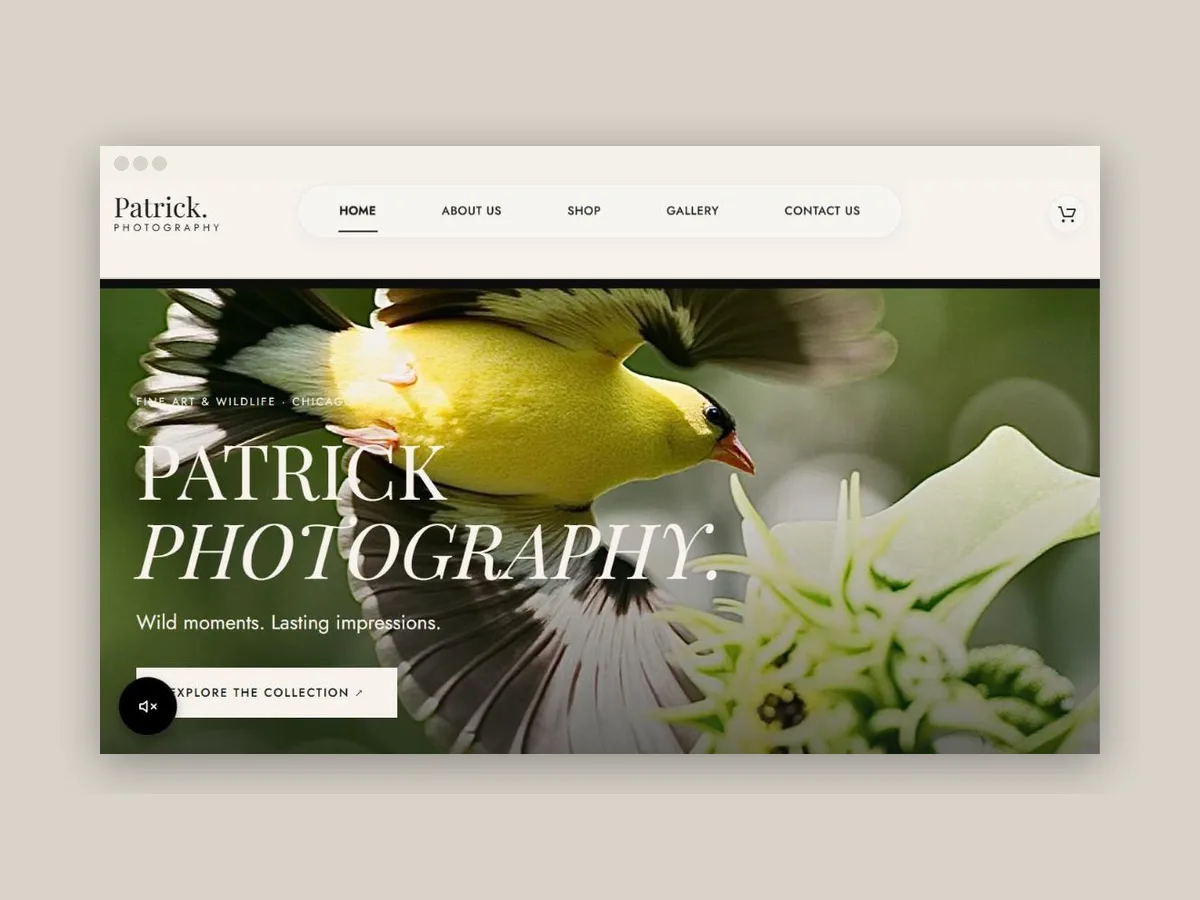
A portfolio and print shop for Chicago fine art and wildlife photographer Pat Curry, built around large, immersive imagery.
Technology
Rated 5 out of 5 Google review
Amazing. These folks took my vision and translated it into something I’m proud to have my name on. Alex, the CEO walked every step of the way with me to ensure mutual success. We both won and I’m looking forward to continued collaboration.
FAQ
For most direct-to-consumer brands, Shopify: hosting, security, and checkout are handled for you, and the app ecosystem is mature. WooCommerce fits better when the store sits inside a content-heavy site, when you need product logic Shopify resists, or when you want full control of hosting and data. We build on both and do not earn more from either.
A Shopify build with custom design typically runs 12 to 18 weeks from kickoff to launch. Large catalogs, complex integrations, or B2B features add time. We plan launches well clear of your peak selling season.
Not if the migration is planned properly. We map every product, collection, and content URL to a 301 redirect, carry over metadata, and migrate customer records. Passwords cannot move between platforms, so we plan an account reactivation email as part of launch.
We provide art direction and product page content templates, and we write category and key product copy when needed. For large catalogs or photo shoots, we work alongside your team or a studio you choose.
Only the ones that earn their place. Every app adds scripts and a monthly fee. We audit apps during discovery and often replace two or three of them with native theme features.
Yes. Many clients keep us on for paid media and conversion optimization once the store is live, which means we are improving pages we know well rather than starting with an audit.
Start a project
Share your store, catalog size, and the systems it needs to connect to. We will outline a realistic plan, timeline, and budget range.